What Is Self-Regulation?
Self-regulation is the ability to manage your emotions, behaviour, and body movement when you're faced with a situation that's tough to handle. It's a skill that develops over time and with support.
Think of self-regulation as an "emotional thermostat"—it helps children adjust their internal state to match what's needed in different situations.
Why Self-Regulation Matters
Children with strong self-regulation skills:
- Handle frustration better
- Get along with peers more easily
- Follow classroom expectations
- Concentrate on learning
- Sleep better
- Manage transitions well
- Cope with change and disappointment
Signs of Self-Regulation Difficulties
- Frequent meltdowns or tantrums
- Difficulty calming down after upset
- Impulsive behaviour
- Trouble waiting for things
- Overreacting to small problems
- Difficulty with transitions
- Sensory seeking or avoiding behaviours
- Sleep difficulties
The Zones of Regulation
Many therapists use the Zones of Regulation framework:
Blue Zone
Low energy states: sad, tired, sick, bored, moving slowly
Green Zone
Calm, alert, ready to learn: happy, focused, calm, feeling good
Yellow Zone
Elevated states: frustrated, worried, silly, excited, wiggly
Red Zone
Intense states: angry, terrified, elated, aggressive, out of control
The goal isn't to always be in the Green Zone—all emotions are valid. The goal is to recognise what zone you're in and have tools to get to the zone you need.
Strategies by Zone
Moving from Blue to Green
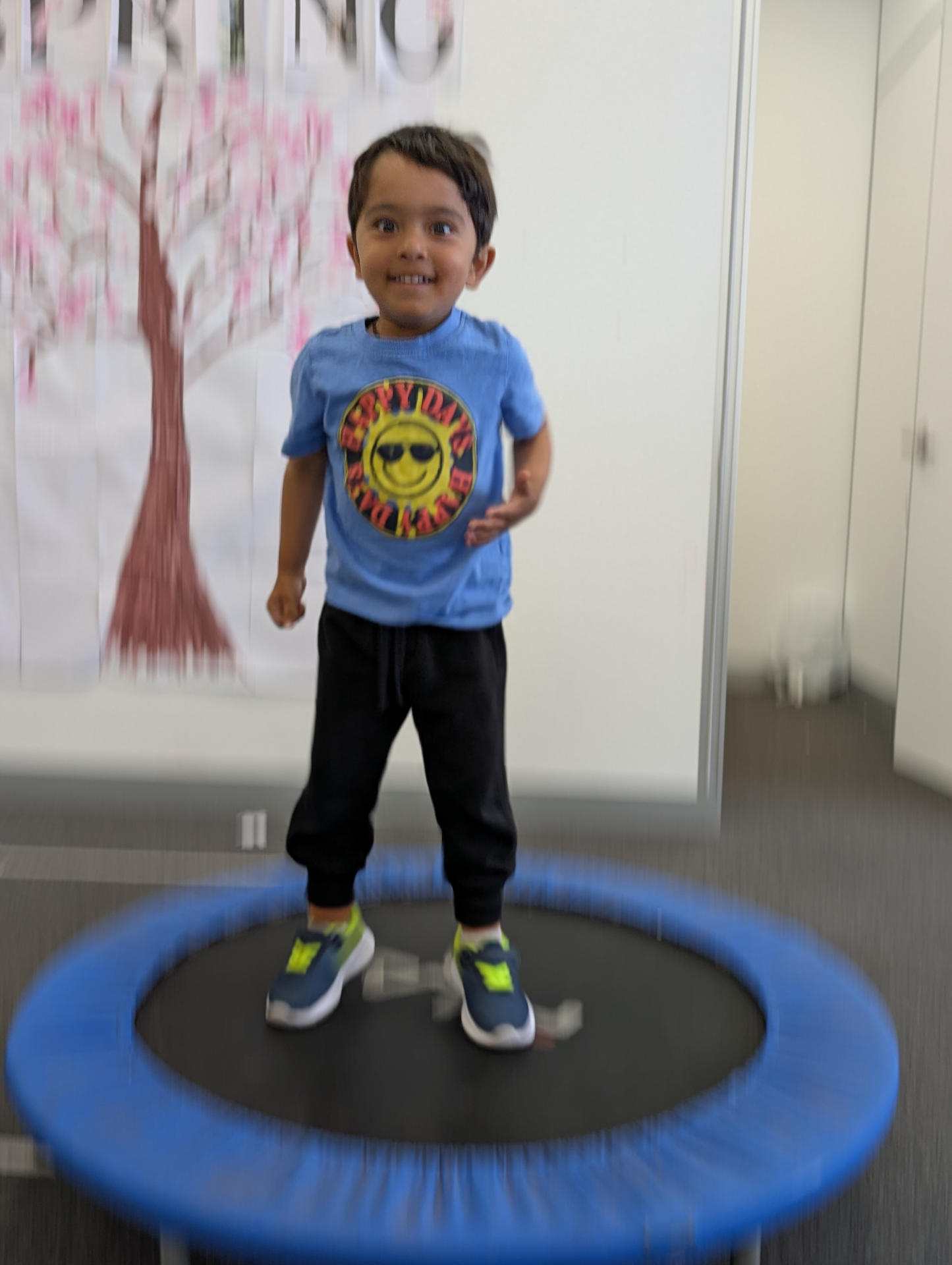
- Movement activities (jumping, dancing)
- Cold water on face
- Crunchy snacks
- Bright lights
- Upbeat music
Moving from Yellow/Red to Green
- Deep breathing
- Heavy work activities
- Quiet space
- Dim lights
- Calm music
- Fidget tools
- Squeezing stress balls
Teaching Self-Regulation at Home
Label Emotions
Name feelings in yourself and your child: "I can see you're feeling frustrated."
Co-Regulate
Stay calm yourself. Children learn regulation through calm adults.
Create a Calm-Down Space
A cozy corner with soft items, fidgets, and calming visuals.
Use Visual Supports
Emotion charts, zone check-ins, and visual coping strategies.
Practice When Calm
Teach and practice strategies when your child is regulated, not in the middle of a meltdown.
Build Body Awareness
Help children notice physical signs: "My heart is beating fast. My hands are clenched."
Celebrate Progress
Acknowledge when your child uses a strategy successfully.
Self-Regulation Activities
Heavy Work
- Pushing/pulling wagons
- Carrying groceries
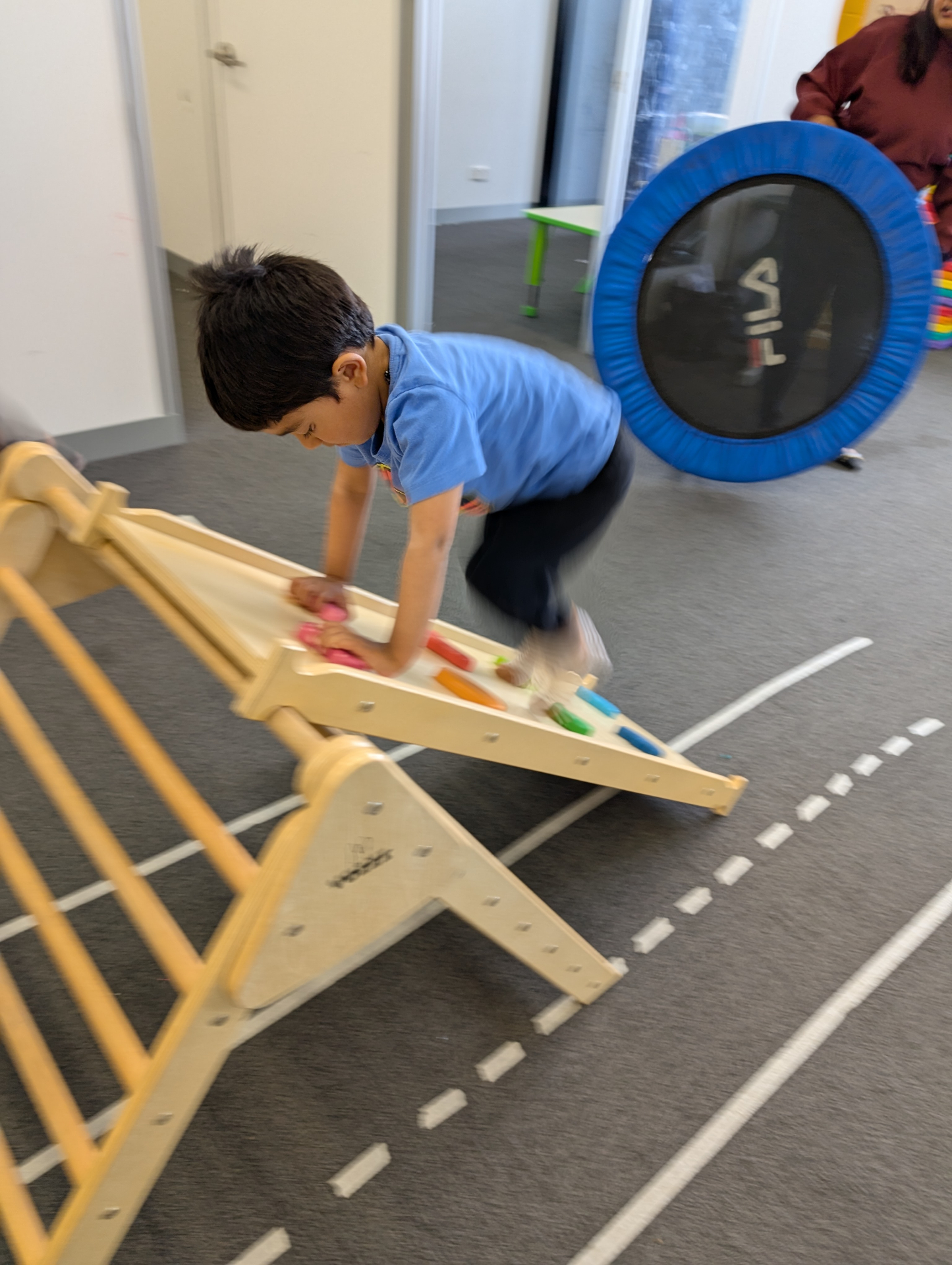
- Climbing
- Swimming
- Playing with playdough
Calming Sensory Input
- Weighted lap pads
- Slow swinging
- Dim lighting
- Soft music
- Fidget tools
Breathing Exercises
- Balloon breathing
- Star breathing
- Bubble breathing
- Breathing buddies (stuffed animal on tummy)
Mindfulness
- Body scans
- Guided visualisation
- Mindful listening
- Yoga for kids
The Role of Occupational Therapy
OTs can support self-regulation by:
- Assessing sensory processing patterns
- Creating sensory diets
- Teaching interoception (body awareness)
- Training in regulation strategies
- Supporting classroom accommodations
At Hop & Learn
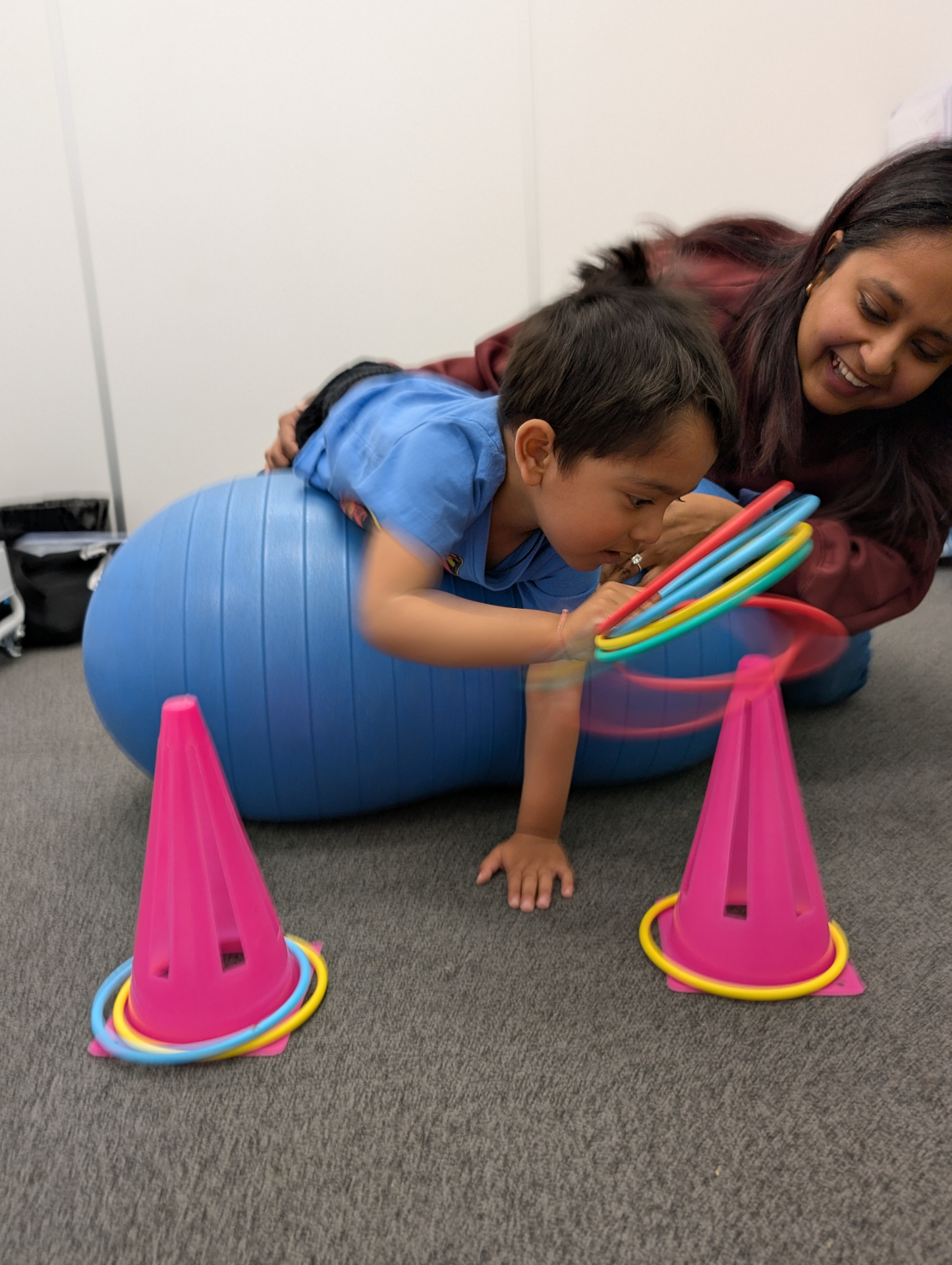
We use a child-centred approach to build self-regulation skills through play. We work with families to understand each child's unique needs and develop practical strategies that work in everyday life.